As an Amazon Associate this site earns from qualifying purchases.
Quick Picks
| Product | Fits | Published detail worth knowing | Link |
|---|---|---|---|
| All-Clad HA1 Nonstick, 2-Piece Fry Pan Set | Replacing just the pans that failed | The listing states high-quality nonstick over heavy gauge aluminum with a stainless-steel base, oven safe to 500°F, induction compatible, with a limited lifetime warranty | Check Price on Amazon |
| All-Clad HA1 Hard Anodized Nonstick Cookware Set 10 Piece | Replacing a whole worn-out set at once | Ten pieces including 8 and 10 inch fry pans, plus PTFE nonstick rated oven safe to 500°F (glass lids 350°F) | Check Price on Amazon |
| T-fal Experience Nonstick Cookware Set 12 Piece | Cooks who overheat pans and need a visual cue | Thermo-Spot heat indicator that turns solid red at proper preheat; the listing states oven safe up to 400°F in one bullet and 350°F in the title | Check Price on Amazon |
Disclosure: We earn a small commission from qualifying Amazon purchases at no extra cost to you.
Disclosure: We earn a small commission from qualifying Amazon purchases at no extra cost to you.
As an Amazon Associate we earn from qualifying purchases. This page contains affiliate links, and we may receive a commission if you buy through them — at no extra cost to you.
As an Amazon Associate, we earn from qualifying purchases.
Last Updated: September 2026
Here's the short answer: a nonstick pan is worn out when the coating is physically damaged — flaking, blistering, deep scratches through to the metal — or when a properly preheated, lightly oiled pan can no longer release an egg without tearing it. Discoloration alone is not a death sentence. Loss of release plus visible coating damage is.
Most people replace nonstick too late, cooking for months on a pan that has stopped doing the one job it was bought for. This guide gives you a five-minute diagnostic, then explains what actually kills a coating so your next pan lasts longer.
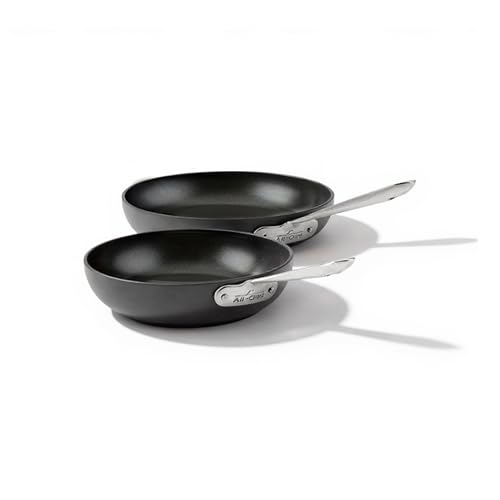
- This cookware set includes 8 inch and 10 inch Fry Pans, ideal for browning, searing, and pan-frying foods like eggs, vegetables, and meats. Its flat surface and flared side walls
- Experience the ultimate cooking convenience at home with easy to clean long-lasting PTFE nonstick that delivers professional performance
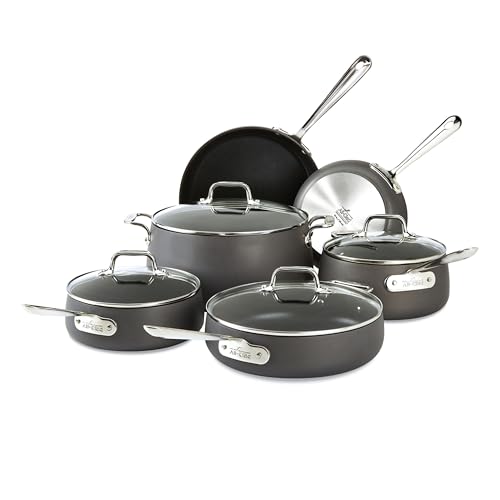
- High Quality Performance with Everyday Convenience - HA1 Nonstick heavy gauge aluminum and stainless-steel base deliver even heat for consistent, delicious cooking. The
- Design You Will Love- HA1 Nonstick has a sleek and stylish contoured design.. Our double riveted stainless steel handles ensure a secure grip and our tempered glass lids provide
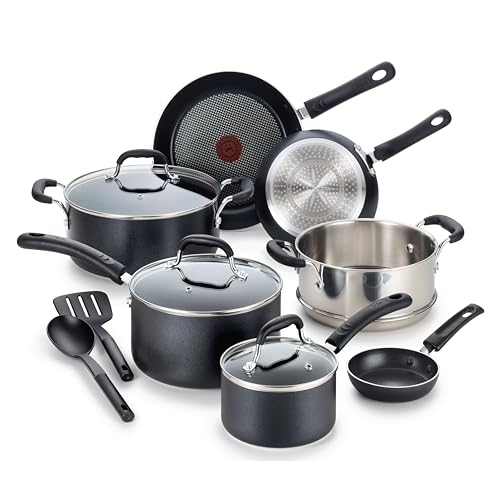
- 𝐒𝐮𝐩𝐞𝐫𝐢𝐨𝐫 𝐍𝐨𝐧 𝐒𝐭𝐢𝐜𝐤: Titanium Non-Stick Interior provides long lasting performance that stands up to frequent usage and allows you to experience easy food release
- 𝐄𝐥𝐞𝐯𝐚𝐭𝐞 𝐘𝐨𝐮𝐫 𝐂𝐨𝐨𝐤𝐢𝐧𝐠: Our pots and pans set non stick includes 8 inch and 10.25 inch frypans, a one egg wonder (not induction safe), 1 quart and 3 quart covered
The Problem: Nonstick Fails Gradually, Then All at Once
A nonstick coating is a sacrificial surface. It is a thin layer bonded to metal, and every abrasive scrub, metal utensil scrape and empty-pan preheat takes a little off. For a long stretch you compensate — a bit more oil, a bit more patience — and then one morning the egg welds itself to the pan.
The tricky part is that two very different problems look similar. Polymerized oil buildup (a sticky brown film from cooking sprays and old fat) mimics a dead coating but is fixable. Actual coating loss is not fixable. Step one is telling them apart.
Step-by-Step: The Five-Minute Worn-Out Test
- Wash the pan properly first. Hot water, dish soap, a soft sponge. All-Clad's own care guidance for the HA1 set says to wash with soap and a sponge and to use silicone, nylon or wooden utensils to preserve the nonstick. If sticking disappears after a real cleaning, you had residue, not wear.
- Inspect under direct light, at an angle. Tilt the pan toward a window or bright lamp. You are looking for flaking edges, bubbles or blisters, and any spot where dull gray or bare metal shows through the black.
- Run a fingernail across the cooking surface. A coating that catches your nail, peels at an edge or lifts as a chip is done. Surface scratches that do not catch are cosmetic wear, not failure.
- Do the dry egg test. Preheat over medium — never high, never empty for long — add a half teaspoon of oil, wipe it around, and crack in one egg. A healthy coating lets the whole egg slide when you tip the pan. If it grips in patches, the coating has thinned unevenly.
- Check the rim and the center separately. Wear concentrates where the burner is hottest and where your spatula lands most. A pan that releases at the edges but not the center is on borrowed time.
When Ceramic Coating Loses Slip
Ceramic (sol-gel) surfaces fail differently. They rarely flake in sheets; they lose slip. The pan looks fine, sometimes nearly new, and food starts grabbing anyway. There is no cosmetic warning, so the egg test is the only reliable signal for ceramic. Once a ceramic pan needs a slick of oil to do what it did dry, it is functionally spent.
If you are switching away from ceramic because of that short slip life, check each listing for what it says about coating chemistry. The All-Clad HA1 10-piece set's listing specifically describes a PTFE nonstick with what it calls long-lasting, easy release; the HA1 2-piece fry pan set's listing says only "high-quality nonstick," and the T-fal Experience set's listing describes a Titanium Non-Stick Interior without naming a polymer.
Tools and Products You'll Need
All-Clad HA1 Nonstick, 2-Piece Fry Pan Set — Best for replacing only the pans that actually failed
Fry pans die first. Saucepans and stockpots rarely need nonstick at all. So the sharpest move for most people is a two-pan replacement rather than a full set.
The HA1 fry pan set's listing states heavy gauge aluminum with a stainless-steel base for consistent cooking, double-riveted stainless steel handles, capacity markings for size identification, oven-safe to 500°F, and compatibility with any stovetop including induction. It also carries a limited lifetime warranty per the listing.
One thing to read carefully before buying: the manufacturer's care instruction for this set says to hand wash to preserve nonstick quality over time. That is stricter than the HA1 10-piece set's listing, which says dishwasher safe. If you are a dishwasher-only household, take that at face value.
Suits: anyone whose skillets are flaking but whose pots are fine, and induction users specifically.
All-Clad HA1 Hard Anodized Nonstick Cookware Set 10 Piece — Best for replacing a full worn-out set in one purchase
If the whole set went in at once — common when everything is the same age and got the same treatment — the ten-piece HA1 set covers it. The listing specifies 8 and 10 inch fry pans, 2.5 quart and 3.5 quart covered sauce pans, a 4 quart covered sauté pan and an 8 quart covered stockpot.
The high oven ceiling is the part worth reasoning about. Oven safe to 500°F means you can finish a frittata or a seared protein under real heat without hunting for a different pan. But note the split rating: the glass lids are oven safe only to 350°F. Practically, that means lids off for anything hot.
The listing calls this set dishwasher safe while also advising a soap-and-sponge wash with silicone, nylon or wooden utensils to preserve the nonstick. Read that as permission, not a recommendation — and given that utensil damage is what ends coatings, the utensil half of that advice matters more.
Suits: a household rebuilding its cookware, on any stovetop including induction.
T-fal Experience Nonstick Cookware Set 12 Piece — Best for cooks whose old pans died from overheating
If your last set flaked in the center and you know you cook hot, the Thermo-Spot indicator is the relevant feature here: the listing says it turns solid red when the pan is properly preheated. That is a direct countermeasure to the single most common coating killer, because it gives you a visual stop signal instead of guesswork.
The nylon tools matter more than they sound — the right utensils are the cheapest coating insurance there is.
Two limitations to weigh. The listing states the one egg wonder is not induction safe, so induction owners lose that piece. And the oven rating is stated inconsistently in the supplied listing information: the product title says oven broiler safe 350F while a feature bullet says oven safe up to 400°F. Treat 350°F as your working ceiling until the manufacturer clarifies, and confirm the current figure on the product page before relying on it.
Suits: budget-conscious cooks who want a preheat cue and included nonstick-safe tools.
Tips for Best Results
- Preheat on medium, with fat already in the pan. Empty high-heat preheating is what causes blistering.
- Use silicone, nylon or wooden utensils only — this is All-Clad's own stated care guidance for HA1.
- Let the pan cool before washing. Thermal shock stresses the bond between coating and metal.
- Never stack pans cooking-surface-to-metal without a cloth or pan protector between them.
- Keep a stainless or cast iron pan for high-heat searing and give the nonstick the eggs, fish and pancakes.
Common Mistakes to Avoid
- Sanding, scouring or "re-seasoning" a flaking pan. You cannot restore a bonded coating. Replace it.
- Blaming the pan for a residue problem. Always clean thoroughly before you diagnose.
- Assuming dishwasher safe means dishwasher recommended. Note that the HA1 fry pan set's listing asks for hand washing specifically to preserve the nonstick over time.
- Ignoring the lid rating. Glass lids on the HA1 set are rated to 350°F while the pans go to 500°F.
- Buying a set when two pans failed. Sets are only cheaper per piece if you needed the pieces.
How We Research
This website does not perform product research. For this guide, every product fact came from Amazon Creators API verified product records and the product listing feature bullets for each ASIN, retrieved 2026-09-06. Claims were checked against each product's own record individually — no specification was carried from one All-Clad set to the other. Where the supplied listing information conflicts with itself, as with the T-fal oven rating, that conflict is reported rather than resolved.
For safety recalls and general consumer protection guidance on cookware, CPSC and USA.gov are the appropriate authorities.
Frequently Asked Questions
Final Verdict
If a coating is flaking, stop cooking on it and replace it — no diagnostic subtlety required. If it just sticks, clean it properly and run the egg test before spending money.
When it is time to buy, the sharpest choice for most readers is the All-Clad HA1 Nonstick, because fry pans are what actually wear out, and its listing states a 500°F oven rating, induction compatibility and a limited lifetime warranty. Choose the All-Clad HA1 Hard Anodized Nonstick Cookware Set 10 Piece Induction instead only if you genuinely need the sauce pans, sauté pan and 8 quart stockpot too. And if your last set died from heat, the T-fal Experience Nonstick Cookware Set 12 Piece is the one with a preheat indicator built in — just accept the lower stated oven ceiling and the non-induction egg pan.
Related Resources
- Best induction-compatible cookware sets
- PTFE vs ceramic nonstick explained
- How to care for hard-anodized cookware
Sources & Methodology
Nothing on this page was cooked in, heated, scratched or measured — this website runs no kitchen and no lab, and says so plainly. What informs this guide is close reading of the Amazon Creators API verified product records and listing feature bullets for the three ASINs above, retrieved 2026-09-06, with each manufacturer figure attributed to the listing that publishes it and internal contradictions flagged rather than smoothed over. For nonstick cookware that is more useful than it sounds: coating chemistry, stated oven ceilings, induction compatibility and the manufacturer's own care instructions are exactly what determine how long a pan survives, and all four are published facts you can verify yourself on the product page before you buy.